

83:
Quoth Oliver: “Huge are the Paynim hordes,
And of our French the numbers seem but small.
Companion Roland, I pray you sound your horn.
That Charles may hear and fetch back all his force.”
Roland replies: “Madman were I and more,
And in fair France my fame would suffer scorn.
I’ll smite great strokes with Durendal my sword,
I’ll dye it red high as the hilt with gore.
This pass the Paynims reached on a luckless morn;
I swear to you death is their doom therefor.”
84:
“Companion Roland, your Olifant now sound!
King Charles will hear and turn his armies round;
He’ll succour us with all his kingly power.”
Roland replies: “May never God allow
That I should cast dishonour on my house
Or on fair France bring any ill renown!
Rather will I with Durendal strike out,
With this good sword, here on my baldrick bound;
From point to hilt you’ll see the blood run down.
Woe worth the Paynims that e’er they made this rout
I pledge my faith, we’ll smite them dead on ground.”
85:
“Companion Roland, your Olifant now blow;
Charles in the passes will hear it as he goes,
Trust me, the French will all return right so.”
“Now God forbid”, Roland makes answer wroth,
“That living man should say he saw me go
Blowing of horns for any Paynim foe!
Ne’er shall my kindred be put to such reproach.
When I shall stand in this great clash of hosts
Til strike a thousand and then sev’n hundred strokes,
Blood-red the steel of Durendal shall flow.
Stout are the French, they will do battle bold,
These men of Spain shall die and have no hope.”
87:
Roland is fierce and Oliver is wise
And both for valour may bear away the prize.
Once horsed and armed the quarrel to decide,
For dread of death the field they’ll never fly.
The counts are brave, their words are stern and high.
Now the false Paynims with wondrous fury ride.
Quoth Oliver: “Look, Roland, they’re in sight.
Charles is far off, and these are very nigh;
You would not sound your Olifant for pride;
Had we the Emperor we should have been all right.
To Gate of Spain turn now and lift your eyes,
See for yourself the rear-guard’s woeful plight.
Who fights this day will never more see fight.”
Roland replies: “Speak no such foul despite!
Curst be the breast whose heart knows cowardise!
Here in our place we’ll stand and here abide:
Buffets and blows be ours to take and strike!”
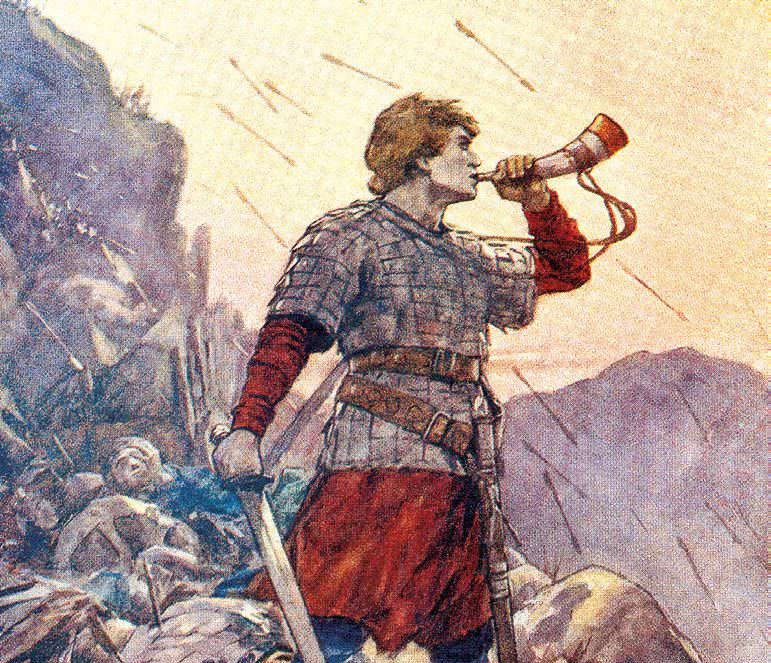
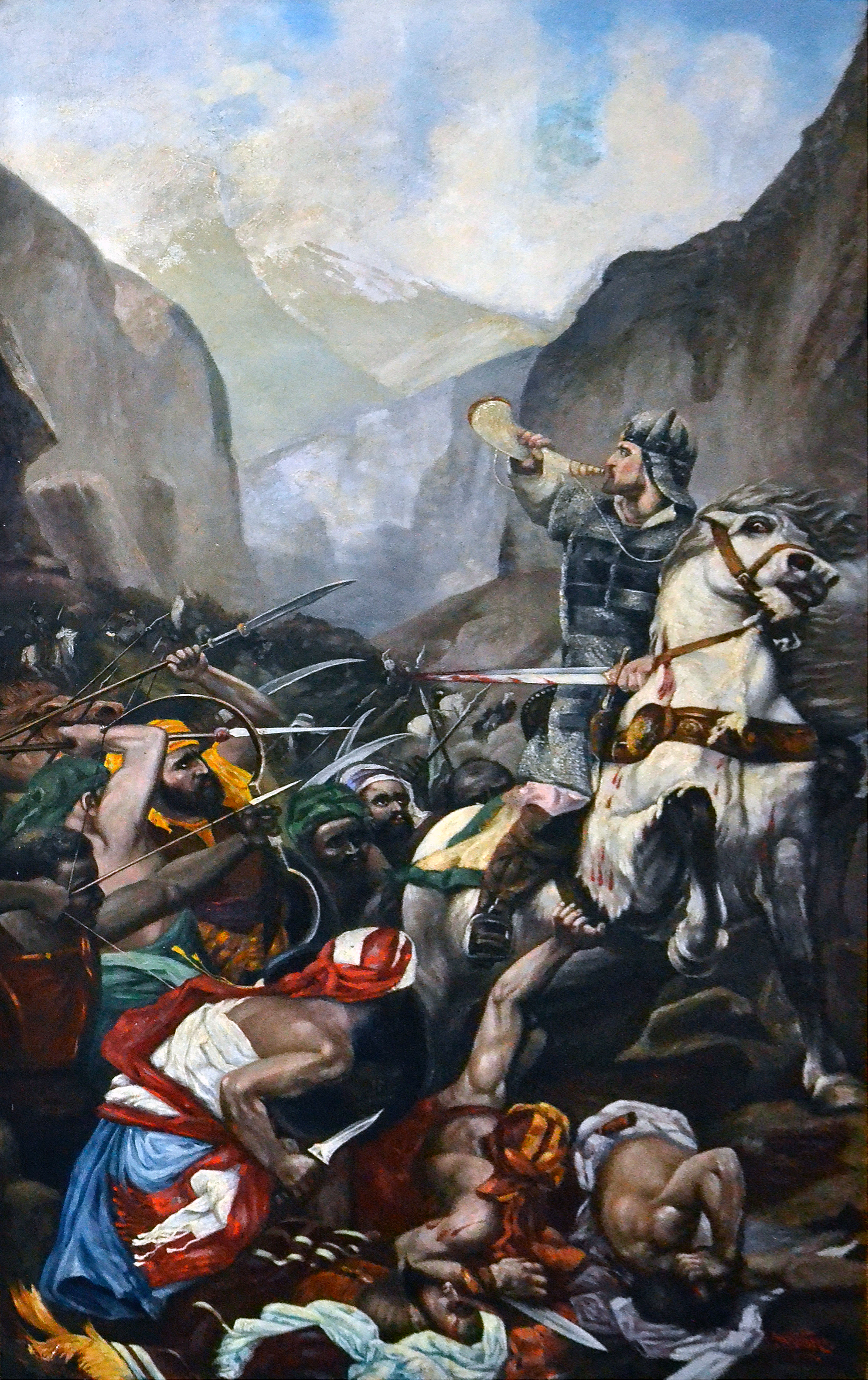


The Song of Roland (French: La Chanson de Roland) is an 11th-century chanson de geste based on the deeds of the Frankish military leader Roland at the Battle of Roncevaux Pass in AD 778, during the reign of the Emperor Charlemagne. It is the oldest surviving major work of French literature. It exists in various manuscript versions, which testify to its enormous and enduring popularity in Medieval and Renaissance literature from the 12th to 16th centuries.
The epic poem written in Old French is the first and one of the most outstanding examples of the chanson de geste, a literary form that flourished between the 11th and 16th centuries in Medieval Europe and celebrated legendary deeds. {from Wikipedia}
Dorothy Sayers translated the epic in 1957, and masterfully so. Having already achieved fame as a novelist and playwright, this may stand as her mightiest achievement. {Or, it may not.} With perfect pitch, she renders this classic in exquisite fashion, in all its inexorable-ness.


































 Bideodromage